
Santa Paula Resident Lookup Coverage
A one-person search works best when each record answers one narrow question. Property and deed material can connect a name to land or a transfer. A court index can identify a party and case history. A vital record can establish an event, while a license or entity filing can explain a public role. The Santa Paula records trail is split between City Hall, Ventura County offices, the Superior Court, and state custodians, so the right source depends on the fact being checked.
| Record | What It Confirms | Where | Access |
|---|---|---|---|
| Assessor and GIS | Parcel connection, APN, and mailing versus situs context | Ventura Assessor and County View | Address or APN online; owner-name display is not an open Internet search |
| Recorder deeds | Party role, transfer date, co-owner or trust, and legal description | Ventura Recorder index | Disclaimer-gated index, appointment or counter, and copy channel |
| Voter registration | A voter’s own status, address, precinct, and districts | My Voter Status or an approved SOS file | Self-authenticated or statutorily approved use only |
| Court case index | Party identity, case number, type, dates, and public docket events | Ventura Superior Court | Online index plus counter or mail file access |
| Vital record | Event identity, date, place, and relationships when shown | Ventura Clerk-Recorder or CDPH Vital Records | Authorized and informational copy rules apply |
| Entity or license filing | Public affiliation, status, agent, or license relationship | bizfile Online or DCA | Free state searches; filed addresses need careful labeling |
| Probate | Decedent, petitioner, representative, heirs, and property disposition when filed | Ventura eCourt and probate records counter | Remote access varies; some files are restricted |
Start with the strongest fact already in hand. An address can lead to an APN and deed. A full name can lead to a court route, license board, or entity history. A family event usually belongs with the county or CDPH, not a general name search. The sequence should narrow uncertainty at each step instead of collecting unrelated names.
Build a Two-Source Santa Paula Resident Lookup
Same-name errors are the main weakness in a one-person search. Santa Paula research may involve compound surnames, maternal and paternal surname order, particles, accents, anglicized spellings, nicknames, and married or birth names. Preserve the spelling shown in each record, then test sensible variants. Dates are better anchors than an age guess, and a shared surname alone does not prove a family link.
- Write down the exact name, middle initial, suffix, surname order, and every spelling variant found in the source.
- Anchor the candidate to an APN, legal description, deed, case number, or other record that has a distinct date or role.
- Check a separate custodian, such as a court event against an entity filing or an obituary against a recorded transfer.
- Label the result precisely as owner, party, agent, licensee, mailing recipient, or occupant only when the record supports that role.
A mailing address is not a situs address, and neither one alone proves current occupancy. A trustee, registered agent, attorney, permit applicant, or business contact may appear beside a Santa Paula address without living there. If two records disagree, keep both facts visible and ask the custodian whether the difference reflects a filing role, an old address, a redaction, or a correction.
Santa Paula Court Routes for Lookup
Santa Paula cases sit in the Superior Court of California, County of Ventura. The court’s Case Inquiry page separates civil, probate, small claims, family, and criminal or traffic paths. Online information is a lead, not the official court record. The route and coverage date matter as much as the name.
| Court route | Search controls | Coverage or result | When online access stops |
|---|---|---|---|
| Civil, probate, and small claims eCourt | Case number or party and name-oriented search | Case number, title or parties, type, filing activity, and available public documents | Omitted material is at Records |
| Family law inquiry | Case identifier or party controls as offered | Database entry from September 1, 1991; older active cases were selectively migrated | Family minute orders are no longer online |
| Criminal inquiry | First Name plus Last Name, or Case Number | Old municipal entries from January 1, 1989; felony entry began in 1995, with partial older active cases | Older and offline files go to Records |
| Traffic inquiry | Citation Number | Traffic case status and details | Use the Records counter for the official file |
| Federal Central District | PACER case locator and party or case query | Federal civil, criminal, and bankruptcy cases, subject to sealing and redaction | Requires a PACER account |
The criminal portal removed Date of Birth and Driver’s License searching on June 21, 2021. Compare a case number, filing date, courthouse or division, middle name, and any address lawfully visible in a filed document before treating a result as the same person.
The Ventura eCourt public portal shows the civil and probate interface used for available public documents. Its screen is helpful for locating a Santa Paula case, but the clerk’s file remains the controlling record.
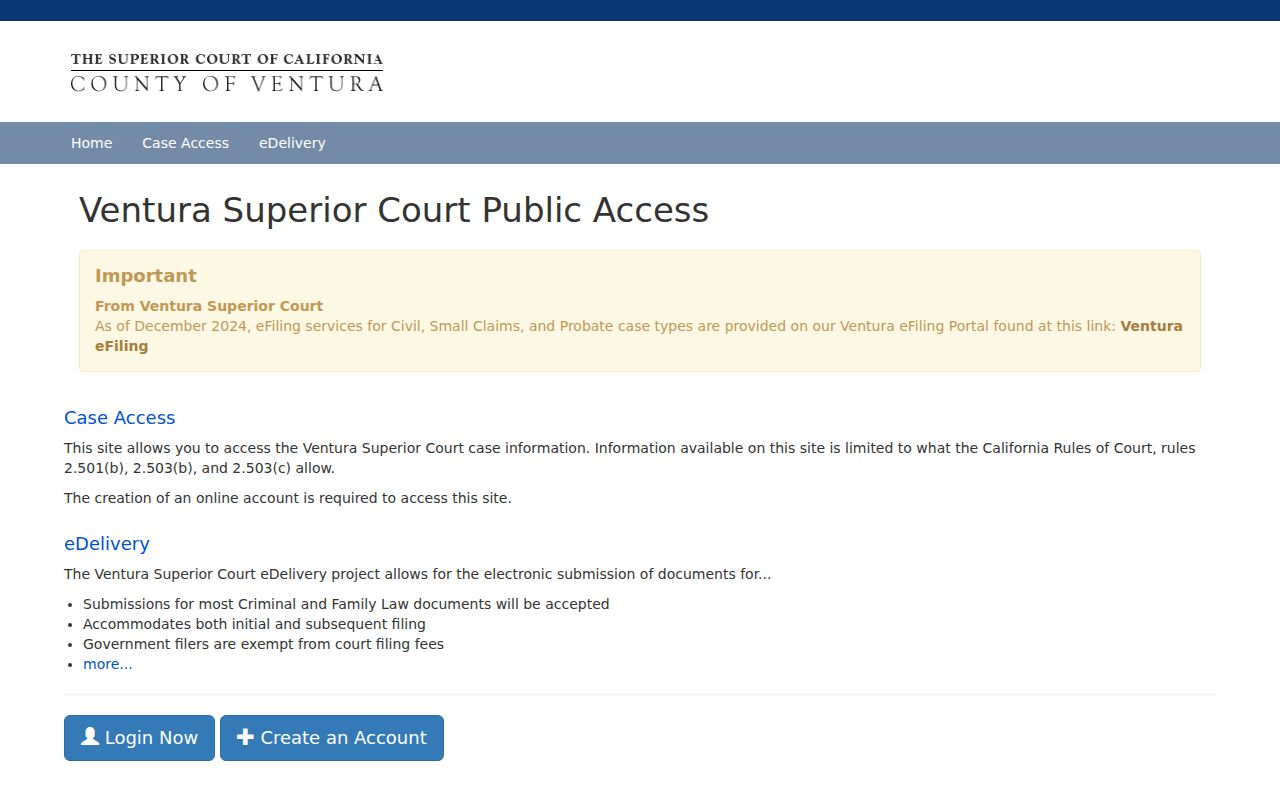
Use the eCourt result to capture the case number and route, then move to the correct Records channel when the needed document is not remotely available.
Get Santa Paula Records After Docket
Ventura court records staff serve public terminals Monday through Friday from 8:00 a.m. to 4:00 p.m. Free terminals are in Hall of Justice Room 218 for civil, family, small claims, criminal, and traffic matters. Probate, guardianship, juvenile, and adoption files use Juvenile Courthouse Room 122. Bring photo identification to view a file. Staff pull up to five cases per customer or transaction, and an offsite file can take at least two court days.
The Ventura Court Records page explains the counter and mail paths. Copies cost $0.50 per page, certification is $40 in addition, and a nonparty may owe a $15 search charge after 10 minutes. The general court instructions say file copies are not sent by fax or electronic delivery, while the current VN266 form includes an email option for uncertified copies. Treat the current form and the Records office as the final check.
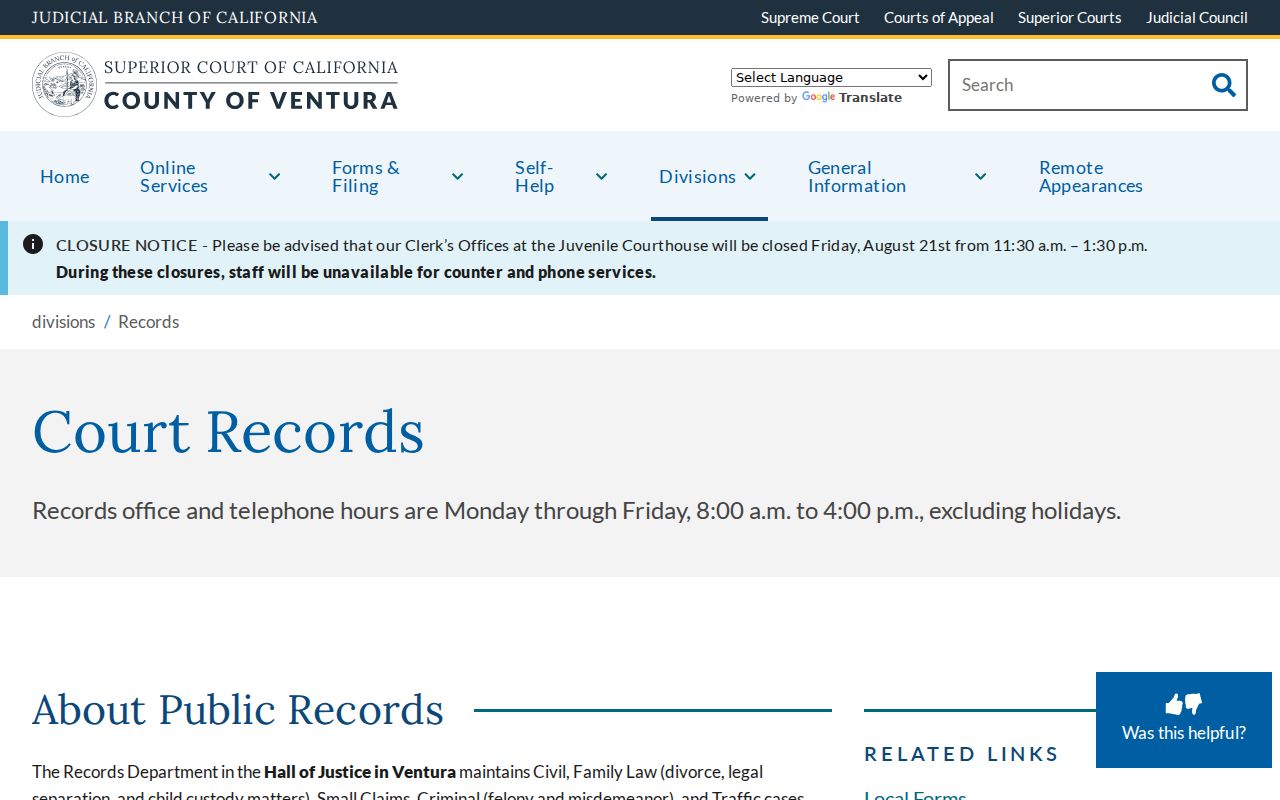
The records counter image points to the practical fallback when a Santa Paula name search reaches a restricted docket, an older case, or a document that is not posted online.
Mail VSC-REC-002 requests for civil, family, small claims, criminal, and traffic records to Hall of Justice, Attn: Records, P.O. Box 6489, Ventura, CA 93006. Mail VSC-REC-001 probate and juvenile requests to 4353 E. Vineyard Avenue, Oxnard, CA 93036. Include a self-addressed stamped envelope and payment. Records can be reached at 805-289-8668; telephone hours are 8:30 to 11:30 a.m. and 1:30 to 4:00 p.m.
A docket is only an index lead. A typical result may show:
- Case number, case title, category, and filing date.
- Party names and roles, such as petitioner, respondent, plaintiff, or defendant.
- Register-of-actions events, hearing date, time, department, and courthouse.
- Disposition or current status, with counsel or representative information where shown.
- Links to public electronic documents when California Rules of Court 2.503 permits remote access.
Sealed cases and documents, juvenile or adoption matters, and confidential family or probate material may be unavailable. The current VN266 request form asks for the requester’s name, agency, mailing address, email, phone, case type, name, date of birth, case number, document choice, certification choice, and delivery method. It also lists $15 search, $40 certification, $15 authentication, $50 exemplification, $0.50 per page, $11 audio, and $15 certified dissolution judgment charges.
| VN266 document choices | Charging documents, disposition, sentencing order, entire file, dated minute order, judgment or dissolution, custody or support order, other, and audio recording with date and department. |
|---|---|
| VN266 delivery choices | Call when available, view only, mail with a self-addressed stamped envelope, and email for uncertified copies. |
| Official-record rule | Use the clerk’s file for a certified record. An online docket or image can guide the request but does not replace the custodian’s file. |
Santa Paula Vital Records Need Eligibility
Birth, death, and marriage events tied to Santa Paula are handled through the Ventura County Clerk-Recorder, with county records documented from 1873 forward, or through the California Department of Public Health for statewide routes. A vital record is not an open contemporary name index. Before ordering, decide whether the needed item is a county certificate, a CDPH copy, a divorce certificate of record, or a court decree.
Health and Safety Code Sections 103525 and 103526 separate authorized certified copies from informational certified copies. An authorized requester selects an eligible relationship or status and signs a sworn statement, which generally must be notarized when mailed. An informational copy contains basic record information but is marked not valid to establish identity. Current fees and processing times change, so confirm them with the CDPH Vital Records office or Ventura County before paying.
Confidential marriage records follow a different rule. Under Family Code Section 511, the issuing county supplies the record only to a party to the marriage or by court order. A divorce case belongs to Ventura Superior Court, while a CDPH certificate of record is an index-style report and not proof of the decree’s terms. Death records identify the decedent and informant, not every survivor. These distinctions keep a person search from treating an event record as a complete family file.
- Docket
- An index of a court matter and its recorded events, not the full case file.
- Index versus image
- An index gives searchable clues; an image is a scanned or displayed document and may still be incomplete or restricted.
- Certified copy
- A copy formally issued by the custodian with certification for a purpose that requires an official copy.
Santa Paula Records for Heirs and Classmates
Different personal goals call for different records. An heir trail usually begins with a decedent’s probate case or will, then moves through recorded estate transfers, an obituary, and vital evidence. A classmate search is better served by a yearbook or class list, a local newspaper, an alumni contact, and a later directory. A shared name is a clue, not proof. The historical collections and directory-reading method belong on the Santa Paula city directory page, where the older shelf can be used without confusing it with a current address search.
- Write the person’s full name and likely time period before opening an index.
- Locate a probate, obituary, yearbook, or directory entry that supplies a date, place, relative, or address.
- Confirm the connection with a deed, vital record, court event, or another independent custodian.
- Stop when a record is confidential, sealed, or restricted rather than treating a public clue as a workaround.
For adoption or birth-family questions, use California’s official adoption-information procedures and legally available vital or court routes. Adoption files are confidential. An ordinary Santa Paula name search cannot open them, and a later directory cannot substitute for the state process.
Santa Paula License Records and Entity Clues
A public filing can help verify a person’s connection to an organization without turning that connection into a home address. The California Department of Consumer Affairs license search accepts board or bureau, license type, business or name, license number, city, ZIP, and county fields as offered by the selected board. Results may show license number and type, status, issue or expiration dates, public address, and discipline links. A practice address is not proof of residence.
The Secretary of State’s bizfile Online business search can connect a name to an entity name or number, status, formation or registration date, jurisdiction, agent, and filed addresses. Ventura fictitious-business-name filings and Santa Paula business-license records add local context, but they require the Clerk or City request channel when no public owner-name lookup exists. Distinguish agent for service, officer, member, manager, license qualifier, premises, and mailing roles in every note.
The business-search image illustrates the filing side of a name match. An entity address can support affiliation, but it does not establish a person’s residence.
The California DCA License Search is the correct starting point for a state license relationship. It does not certify that a licensee lives in Santa Paula.
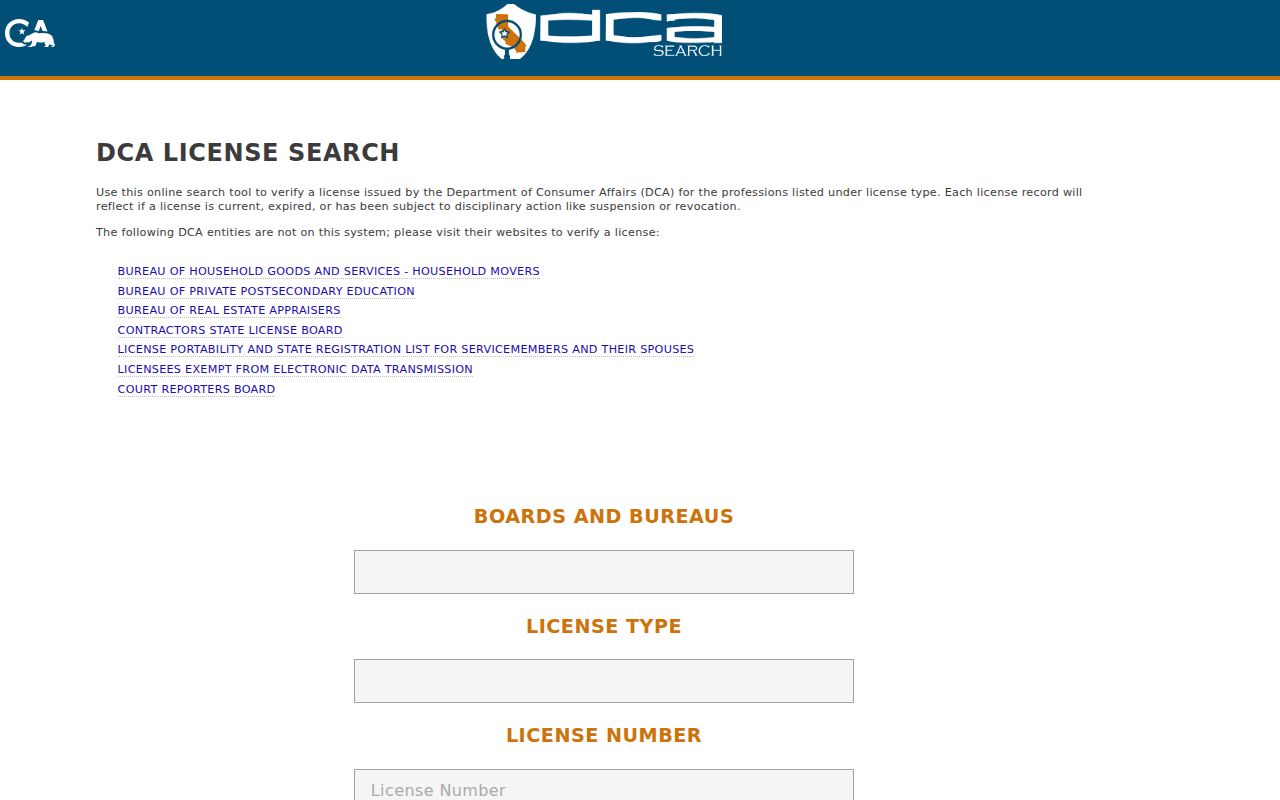
License results are strongest when paired with a dated court, deed, obituary, or entity filing that supports the same name and role.
Unclaimed Property in Santa Paula Records
The California State Controller’s unclaimed-property search is a free name lookup that can return a reported city, address clue, or holder relationship. It is historical reporting evidence, not a current residence check. A claim requires identity and relationship evidence, so a result should be saved with its name spelling and reported details before it is compared with a separate record.
The State Controller unclaimed-property portal is the official place to search and claim. It is also a useful safeguard against fee scams: a caller asking for advance payment or banking credentials is not the official claim process.
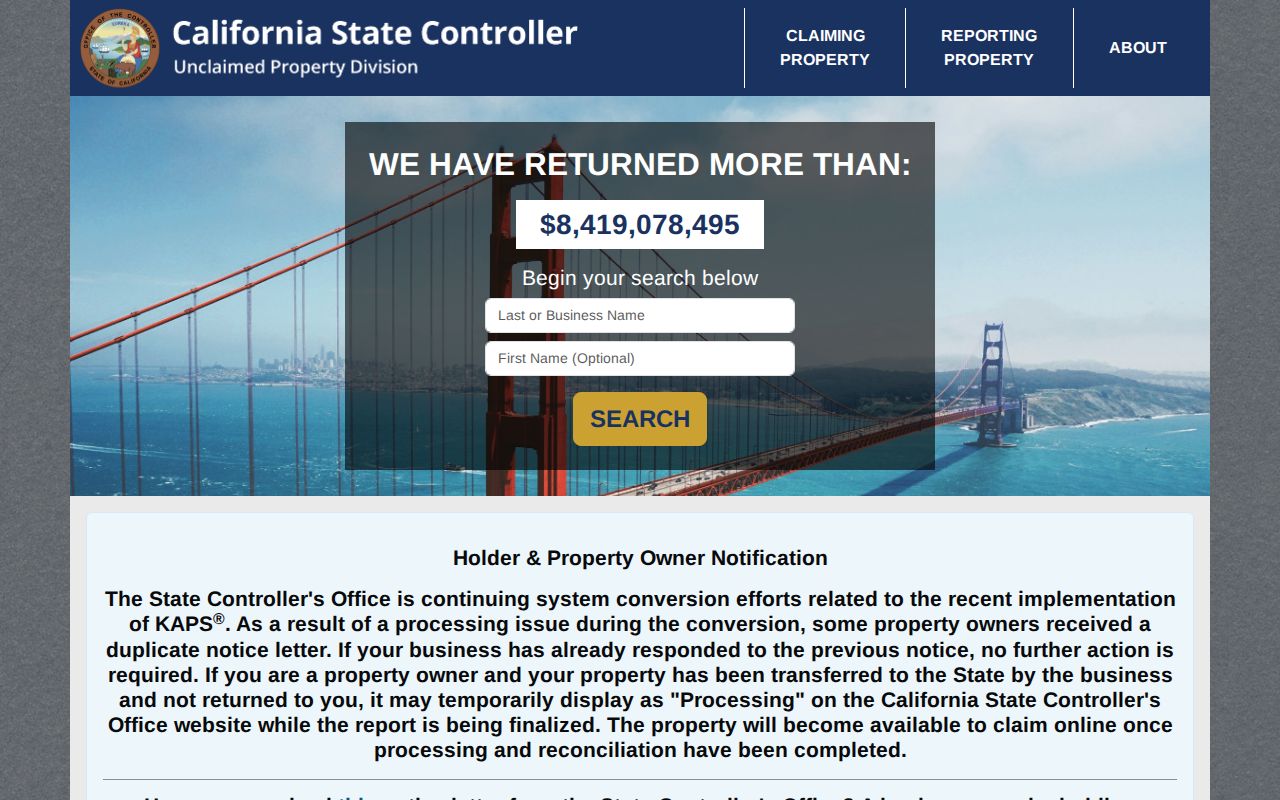
Use the unclaimed-property result as one dated clue in a two-source identity match, never as a stand-alone statement about where a person lives now.
Santa Paula Federal Resident Lookup
Ventura County lies in the Central District of California, so a Santa Paula federal name search moves outside the county court portal. The PACER case locator searches federal civil, criminal, and bankruptcy matters by party or case, subject to sealing and redaction. The Central District supplies the governing federal court context.
PACER charges $0.10 per page, generally caps a document at $3, and waives quarterly billing when total charges are $30 or less. Those costs apply to the federal system, not to Ventura Superior Court. Record the district, case number, filing date, and party role before deciding whether a federal result belongs to the Santa Paula person being checked.
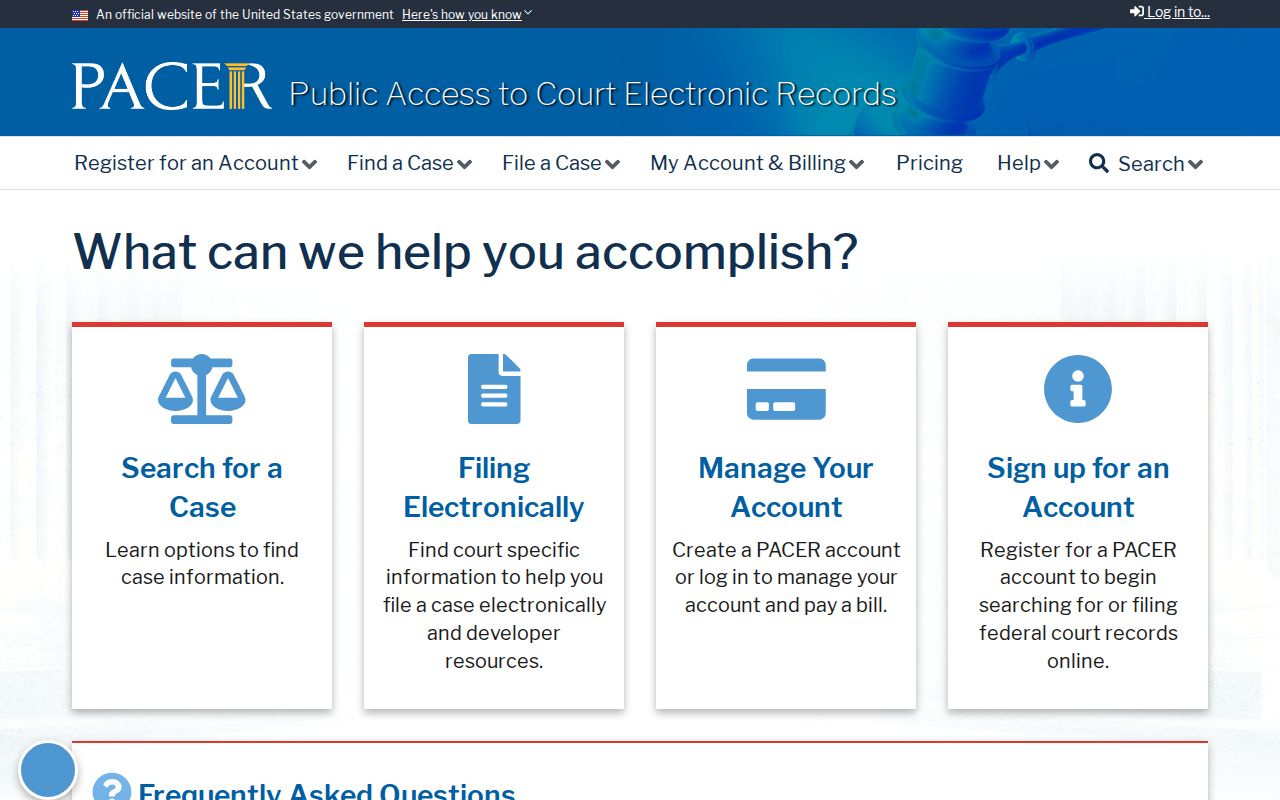
Federal results can fill a jurisdiction gap, but sealed or redacted material remains unavailable and a public party entry still needs identity controls.
Santa Paula Resident Lookup Privacy
California’s public-record structure places a limit on every one-person search. The California voter tool authenticates the voter with name, date of birth, and identification details; it is not an open name or street directory. Elections Code Section 2194 restricts voter records and approved uses. Safe at Home, under Government Code Sections 6205 through 6211, provides eligible participants a substitute mailing address and confidential voter registration. It does not erase old records, and protected addresses can remain subject to separate custodian rules.
When a particular municipal record is not posted, a narrowly framed request to Santa Paula City Clerk or the City’s public-record request portal can ask for an existing permit, code case, license, or other identifiable record. The California Public Records Act, Government Code Sections 7920.000 through 7931.000, ordinarily calls for a determination within 10 days and permits a written 14-day extension for unusual circumstances. A request does not guarantee disclosure, and the custodian may apply an exemption or ask for a narrower scope.
Corrections go to the office that created the record: the Assessor for roll attributes, the Recorder for indexing or a corrective instrument, the court clerk for a docket or file procedure, the Secretary of State or licensing board for filings, and elections officials for a voter’s own registration. A directory cannot rewrite a public record.
Lawful use. A Santa Paula name search is for personal, lawful research, genealogy, reconnecting, estate work, or civic records review. Do not use a record to stalk, harass, threaten, or intimidate another person.